My Journey with Alibaba Cloud: Hackathon Experience and Beyond
Just less than 2 weeks ago, my friends Kafi, Eric, and I had the opportunity to participate in an actual offline hackathon, I repeat offline, from Melting Hack sponsored by Alibaba Cloud in Tokyo.
I, being never participated in an offline hackathon before, would've assumed it would be no different than online ones, other than working in person. Besides, the hackathon website itself also briefly mentioned
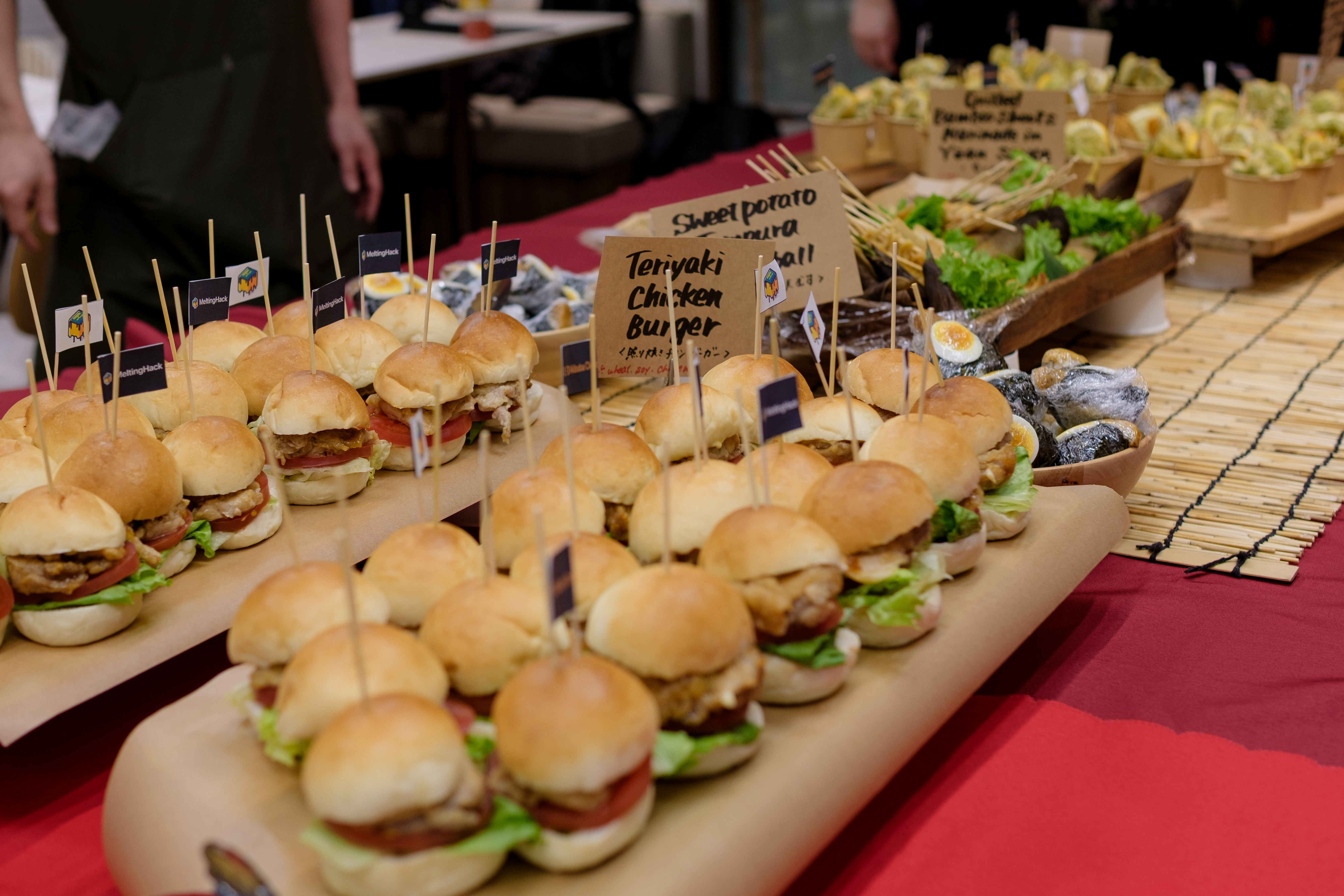
Refreshments: Light snacks and drinks will be available throughout the hackathon.
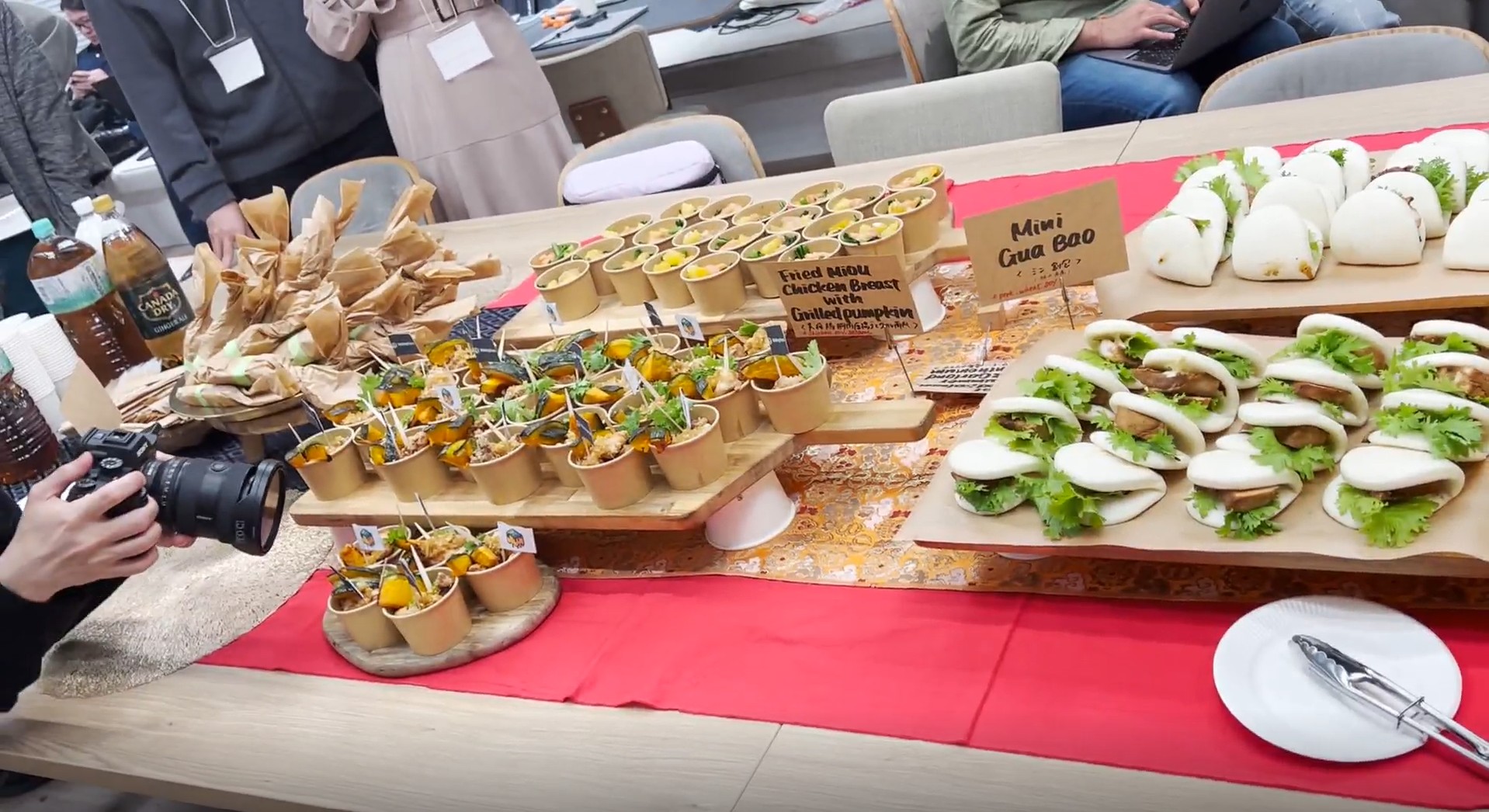
I would like to apologize for not jumping directly into the topic of what this article is going to be about. But wow. The "light snacks" provided here in this offline hackathon sure blew my mind.

Background
Ok ahem, now I have finished expressing my exclamation, time to explain how it all got started and what is this Melting Hack hackathon and Alibaba Cloud.
Like usual, me sitting in my gaming chair, fist-propped and elbow-anchored, scrolling through itch looking for more game jams to join with an air of detachment. Then one of my friends sent me a game jam link saying, "Hey, you are living in Japan and like tech, right? I think this Tokyo game jam would be perfect for you." And just like that, I was in.
Melting Hack is a non-profit organization located in Tokyo, hosting numerous community tech events like night meetups and hackathons. This time, the hackathon is a 3-day game jam and is sponsored by a cloud solution company, Alibaba Cloud. For people who are unfamiliar with cloud solutions, you can think of Amazon Web Services, Google Cloud Platform, or Microsoft Azure: essentially offloading the maintenance of physical machines like servers and databases needed to host online services a company is developing to those guys. Naturally, this video game hackathon also requires the participants to incorporate an element of Alibaba Cloud into their games as well.
The project should exhibit a compelling concept with significant future potential and a clear vision
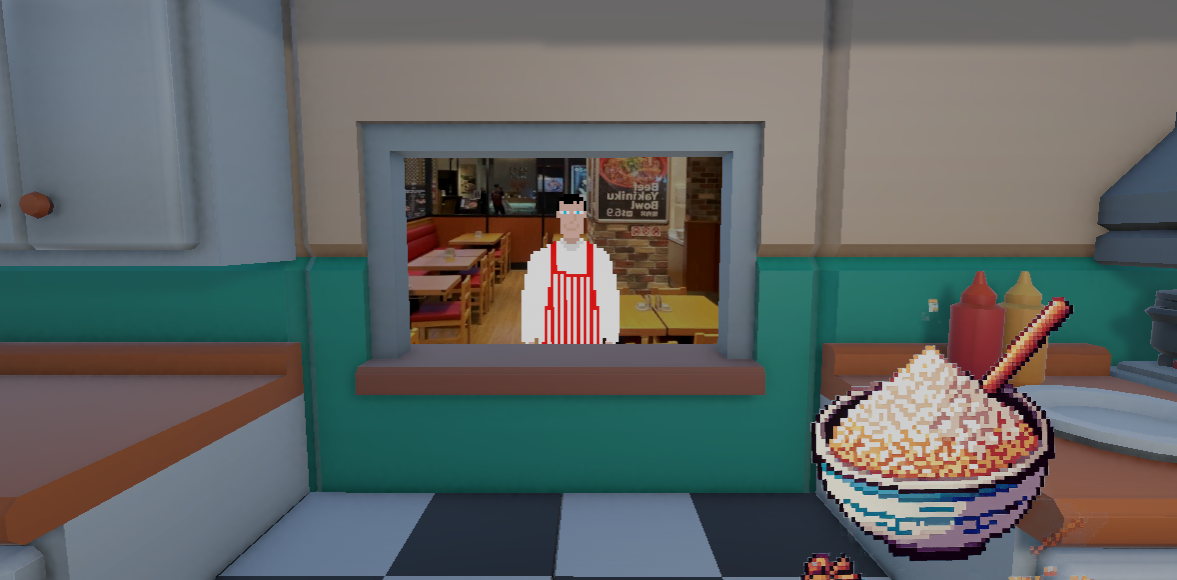
Noticing that the Tokyo Game Jam looks for video games that have potential, I started doing some research on interesting game ideas that use one component of Alibaba Cloud, generative AI. Eventually, I found the game idea of a 3D cooking simulator where you can merge food together into new food fascinating (e.g. a pixel art of banana + a pixel art of hamburger = a pixel art of hamburger with bananas inside). The fact that a player will never know for certain what exactly will come out on the other end brings a lot of emergent gameplay that I think would be fun to play around.

Day 1
After we stepped our foot into the hackathon room, we were greeted with the buzzing sound coming from the industrious clicks of the camera crew. The hackathon organizers are standing in the front, pointing to their slide shows, introducing the Tokyo Game Jam hackathon. Between the organizers and us coming from the entrance, there was a wave of eager participants sitting, eyes wide with excitement. Judging from their appearance, they all seem to come from diverse backgrounds and job occupations. Did I say jobs? Yes. It would've seemed like we were the youngest participants in the group, havingn't even received a graduation diploma, let alone a professional career. Nonetheless, our morals did not falter, as we are the prime in terms of biological age.
Following the end of event announcements, team formation follows. All three of us, being the introverts we are, struggled to make any connections with the crowd of participants. We originally planned to recruit some artists or sound designers, since none of us are experts in that area. I occasionally went against my nature and tried to muster some courage, conducting social interactions with other humans, as expected, my persuasions fell flat, and we were back to just ourselves.
As the noise of the crowd dies down and groups made, we started dishing out pen, paper, and laptop, flesh out our game idea into further details.
Just like that, the first day is over. The calm before the storm, the quiet before the crescendo, the deep breath before the plunge. We "formed" our team, refined our game idea, and took a 9-hour-long sleep, knowing this would be the last rest we would have before we went on our 40-hour non-stop grind in the pursuit of bringing our game idea into reality.
Day 2
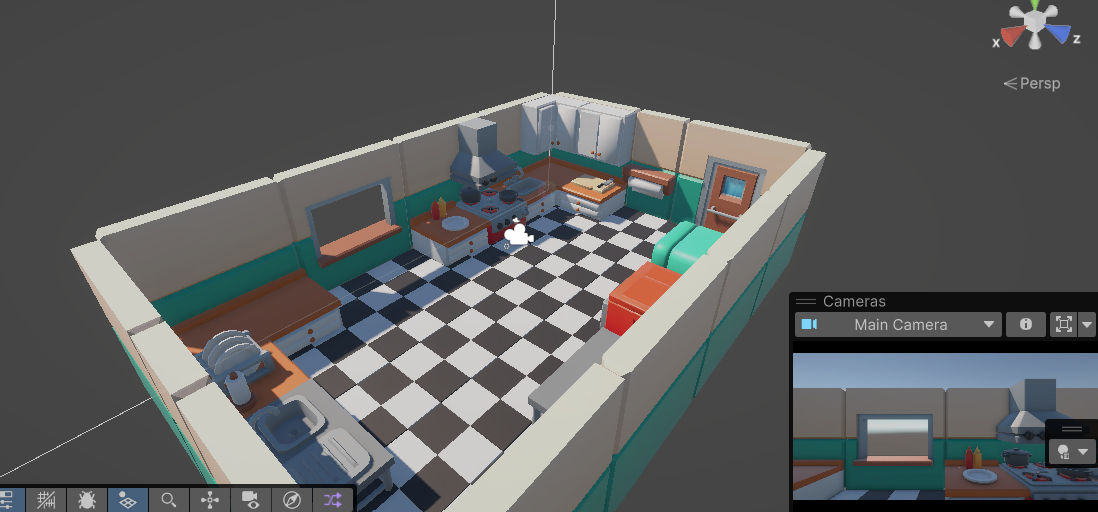
The game was on. As we stepped into the hackathon building once again, we went immediately into action. Since none of us are great designers or composers, the only way to produce good visuals is to outsource them from the internet. There are 5 billion people using the internet every day, it would be silly to imagine that there are no initiatives that give out decent quality art and music assets with open source license. We decided to take assets from those two great resources opengameart.org and this reddit post for use, with Kafi handling the creative section. As for the AI component, we will need a backend; our friend Eric, who has an extensive background in those areas, took this task head-on. As for me, who has more actual game development experience, take on the task of programming and playtesting in Unity.
We worked for 12 hours non-stop, from 10 o'clock in the morning when the hackathon building opens, to 10 o'clock at night when the building closes. During noon, we were kindly offered by the organizers with free selection of pizza slices, and during the night, coffee.
Since we are all working offline, I found communication to be much easier than all the online projects I have done previously. Just by raising our head, or speak a sentence out loud, each of us can quickly get a response of each other and grasp the sense of progress from everyone else and allow troubleshooting to be extremely easy.
Occasionally, I would raise my head and see how other participants were doing. But woah, they were locked in. I was pretty sure one guy legitimately sat in the same position for 12 hours straight with the same posture, only taking a single restroom break. I think it was also thanks to this highly heated atmosphere with everyone radiating intense concentration that also kept us in check. Afraid that if we ever get sidetracked, we would have no chance to get awards for good.
Day 3
When we finished our work on day 2, it was 10 PM. We were tired, hungry, and homeless. However, the game is yet to be finished, so we move on.

Since our hotel had a terrible internet connection, our first choice in mind was to go to a local 24/7 McDonald's to stay the night and continue working. Unfortunately, when we settled in, we realized there were no outlets in place, and we had to switch. We also considered Sukiya and a few other restaurants, but after doing some more research, we found none of them have outlets available either. Our second choice was the nearest Karaoke. While it does provide overnight options and outlets, the internet connection was not the best. We then went to the nearby Net Cafe, but it was full.
At this time, it was nearing 12 AM in midnight. We were still wandering in the streets aimlessly. With less than 14 hours before the deadline, time was our most precious commodity. Looking again at our Google map, we decided to venture further and give another Net Cafe 30 minutes away a go. Fortunately, this time it was a success. There were still seats available, and most importantly, they offered free snacks like ice cream and coffee also.
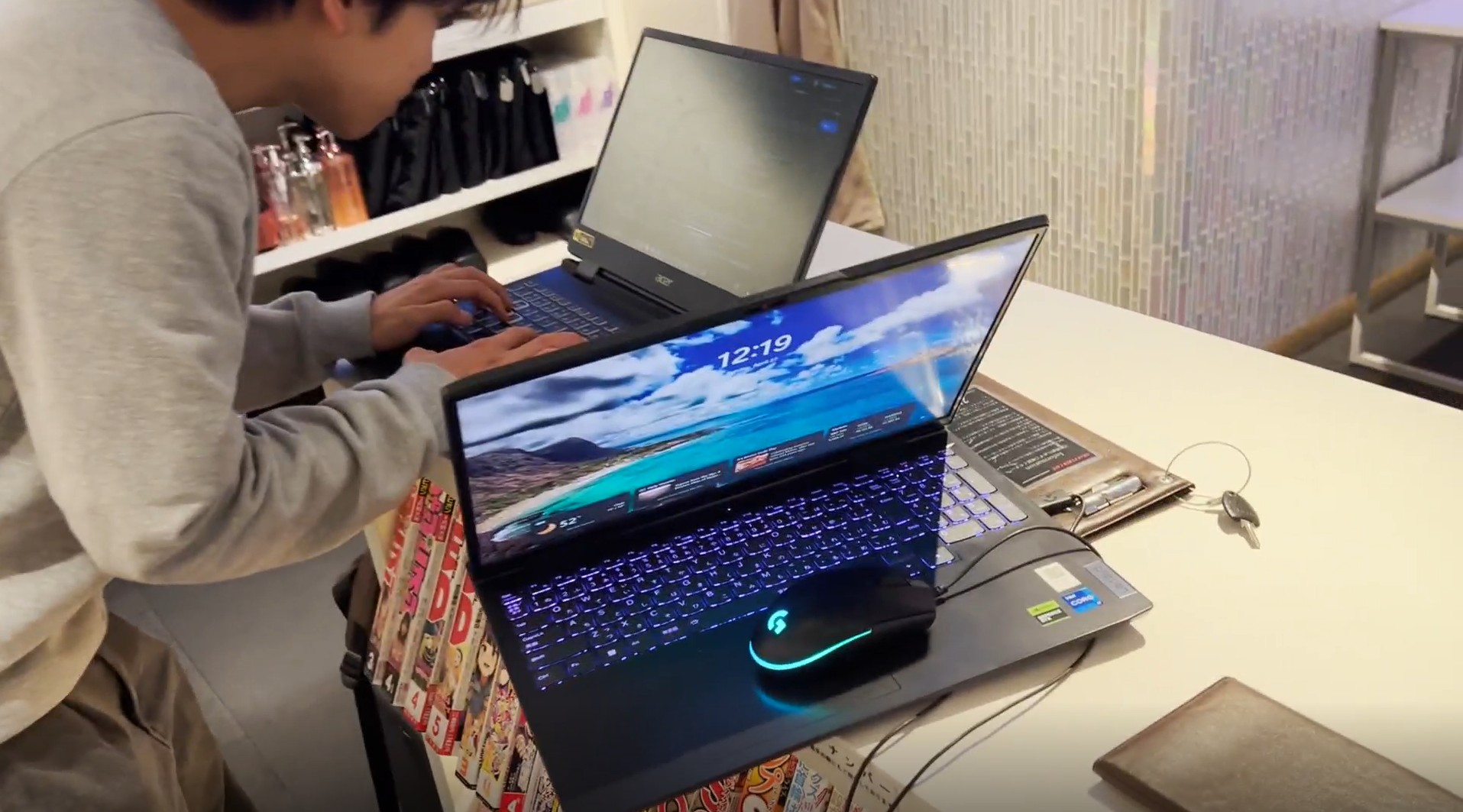
Finally rested, fed, and settled in place, we continued our work at 1 AM.
At this point, the game environment was laid out quite nicely in the Unity Editor. The kitchen scene was nicely decorated, with a good selection of music and other art assets in our assets folder ready to be placed in, and the backend server was hosted stably in the Alibaba Cloud. The only problem now left, for some reason, was to actually make a successful API call from the Unity Editor to the backend server.
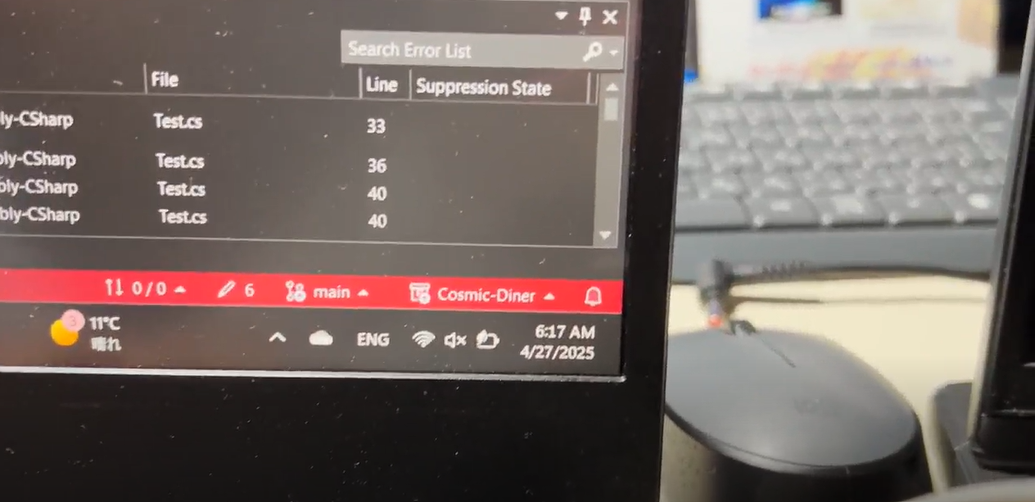
None of us actually had any experience working with Unity's REST API functions, spent the next 6 hours just trying to figure out how exactly to troubleshoot this issue. It turns out, there was a setting in the Unity Editor's settings window that we have to turn on API requests to actually make valid API calls...
After merging both the backend and Unity Editor, it was time to write code to make the machines actually functionable. After 9 AM, we decided to get out of the Net Cafe and migrate back to the hackathon building, and continue making improvements and changes to perfect the game. For some reason, despite having no sleep at all, after I worked past my typical wake-up time, I feel stimulated again. The organizing staff members also kindly gave away free onigiri (rice balls) to fuel our final sprint.
The last few hours before the deadline were swift and escalating intense. Eyes glued to the screen, fingers pressing keyboards as if they had a consciousness of their own, the rest of the world shut behind me. Before I realized it, time was up.
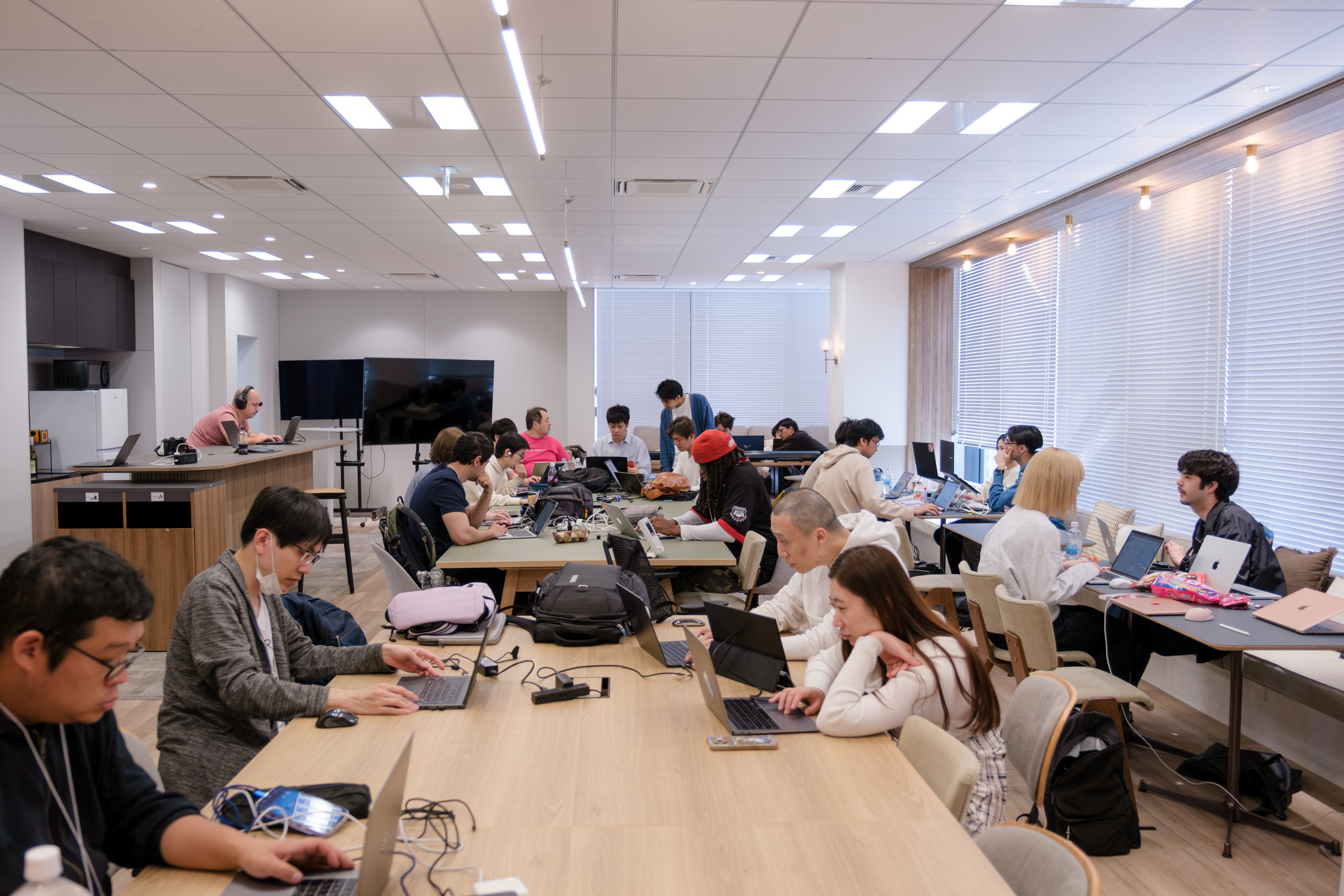
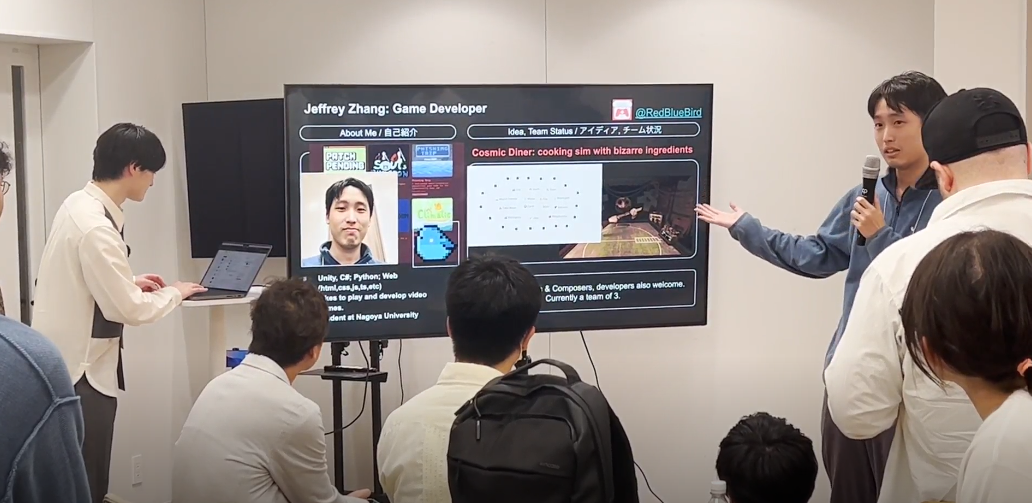
Afterwards, each team spent 10 minutes pitching their final game to the crowd and judges. When we presented ours, we lost track of time and focused too much on the live game demonstration rather than the actual slide presentation. Ending up with half of our slides not even having the time to be played. Surprisingly, our game demo elicited quite a few laughs from the crowd, offering us a measure of comfort and easing our anxiety.
Awards
This was our first time making a 3D video game, and also our first time offline. Being the youngest in the crowd of participants with minimum experience sure makes the idea of winning an award a bit hard to fanthom. Nevertheless, we clenched our fists and teeth, heart pumped, eyes focused, as the judges slowly walked up to the stage presenting their final judgements.
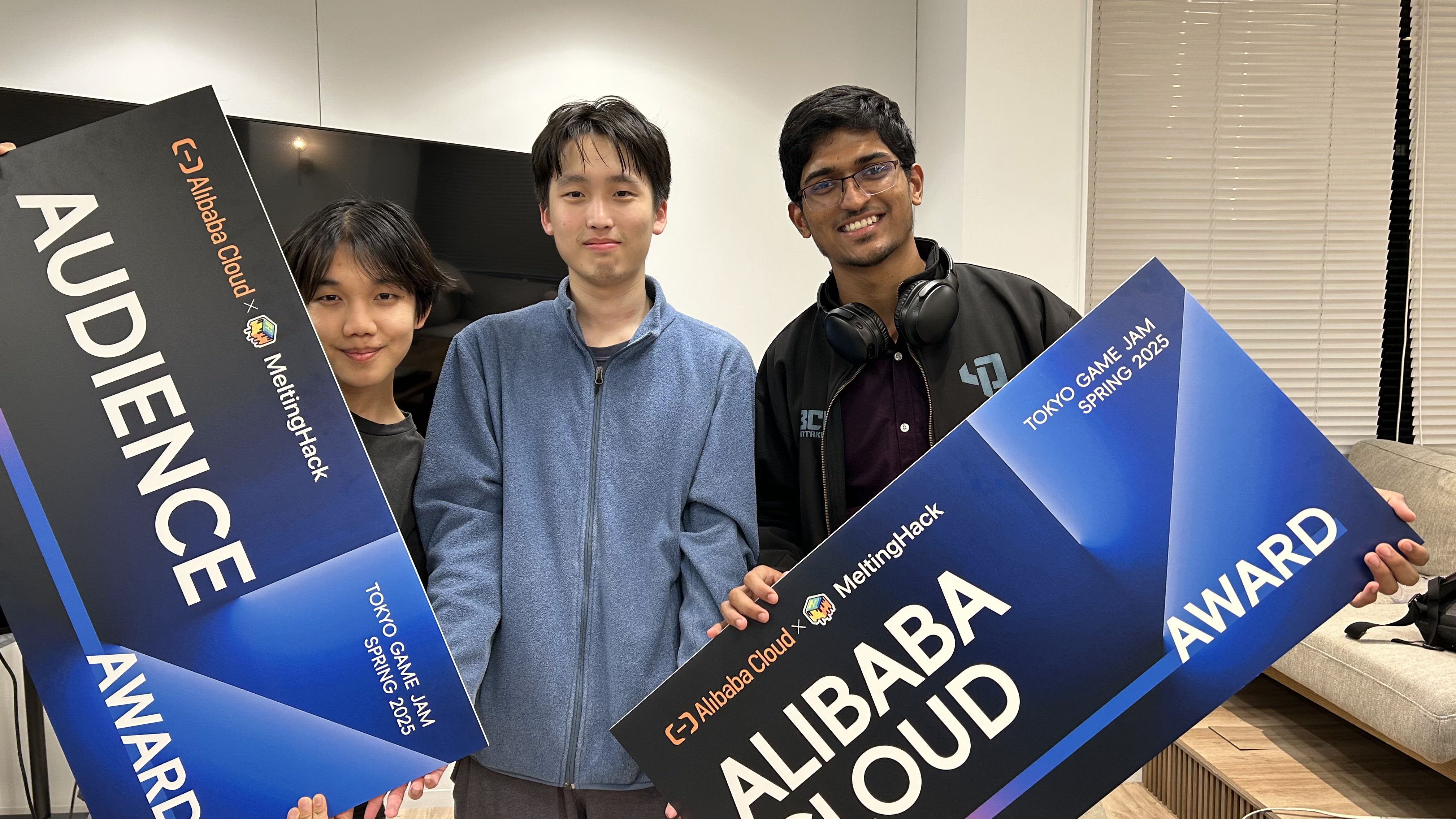
There are in total of five awards and 15 teams. Best use of Alibaba Cloud, favored most by the audience, and top one, two, three awards for projects deemed well by the judges.
We... won two of them. Alibaba Cloud and most favored by the audience.
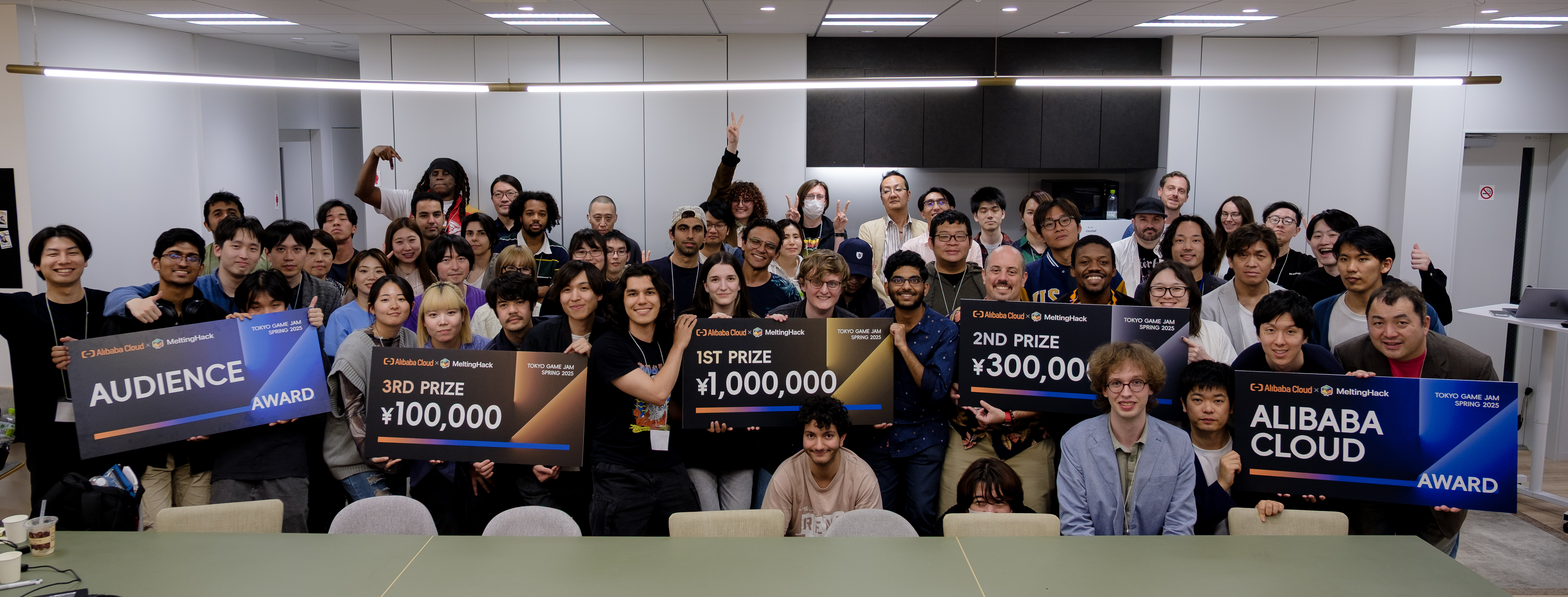
It was surprising. The next hour felt like a dream. The time passed by faster than it was during the deadline sprint. Everytime when we move around, there would be other participants reaching their hands congratulating on our success, saying how creative or interesting the game was. Now as I try to recall any exact conversations as I am writing this article, I fail to get remember any exact dialgoue.
Though the food they offered at dinner on day 3 was pretty darn good.
Conclusion & Future Aspects
There are a few takeaways that can be made. Looking back, I think I could've definitely had better time management in different development stages of things. We spent too much time thinking about how to implement the core features of our kitchen simulation game that we barely left time for playtesting and presentation. And now that I know booking an overnight Net Cafe is much cheaper and offers more benefits than a hotel for situations like this, we can plan our next offline events more efficiently.
Once again, I thank Melting Hacks and Alibaba Cloud for providing this amazing opportunity that allows for hands-on experience with cutting-edge technologies, establishes connections, and showcases our ideas to a wider audience.
I found the game that we were building to have quite of potential. There were still a lot of components that we came up with that were yet to be implemented into the actual game itself. We hope that through the resources from the Alibaba Cloud award, we will be able to develop the project into a more fleshed-out video game.
You can view the game's hackathon version at this itch page.